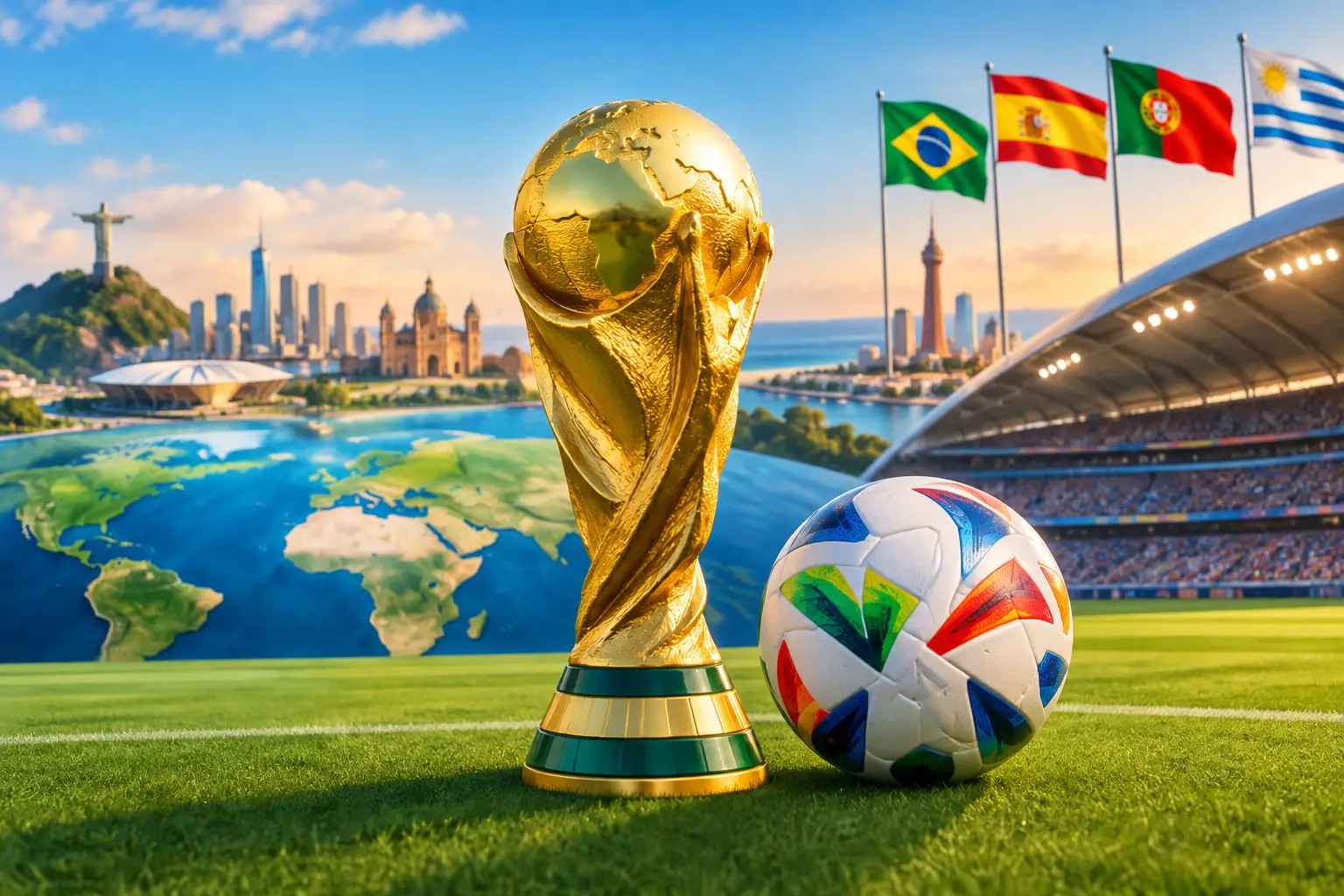
The 2030 World Cup will not begin in one country, or even on one continent. It is set to be football’s biggest centenary party, with matches across Europe, Africa, and South America – and a schedule that could create some fascinating betting value along the way. Here is all you need to know about football World Cup 2030 before the qualification race, team news, and tournament odds begin to heat up.
All You Need to Know About Football World Cup 2030
The 2030 FIFA World Cup marks 100 years since the first tournament was played in Uruguay in 1930. FIFA has awarded the main hosting duties to Morocco, Portugal, and Spain, while Uruguay, Argentina, and Paraguay are expected to stage special centenary opening matches in South America.
That makes this a six-country World Cup across three continents. It is an extraordinary concept, but it also comes with practical questions around travel, recovery time, ticket access, and how sportsbooks will price teams facing very different conditions. A hot afternoon in Morocco, a packed Spanish stadium, and a long-haul South American trip are not interchangeable variables.
The tournament will also use the expanded 48-team format introduced for the 2026 World Cup. More teams mean more matches, more underdog stories, and more markets than the old 32-team setup. For fans and bettors, it should be a month-long football feast with outright winner odds, group-stage action, player props, live betting, and potentially massive price movement after every upset.
Hosts, Centenary Matches, and What Is Confirmed
Spain, Portugal, and Morocco are the primary hosts. Spain brings a deep football culture, major stadium infrastructure, and cities capable of staging the tournament’s biggest knockout ties. Portugal offers compact travel compared with Spain and an intense home atmosphere, while Morocco will make history as a key part of the first World Cup spread across Europe and Africa.
Uruguay, Argentina, and Paraguay are included to honor the competition’s origins. Uruguay hosted and won the inaugural World Cup, so a return to Montevideo for a commemorative match carries obvious emotional weight. Argentina and Paraguay will also participate in the centenary celebration.
The exact match allocation, stadium lineup, and opening-game details can change as FIFA finalizes operations. That is worth remembering when early betting markets appear. A host nation’s potential home schedule can dramatically affect outright prices, especially if a team is projected to play most of its matches in familiar venues and climates.
Why the multi-continent setup matters
The special South American fixtures will likely require logistical planning unlike any previous World Cup. Teams involved in those games may then need to travel to the main tournament region, creating an unusual early disadvantage or at least a major recovery question.
For betting purposes, do not assume the biggest name is automatically the best pick. Squad depth, travel management, and the ability to rotate players could matter more than ever. Elite teams with two strong options in every position may be better equipped for a tournament with heavy demands on players and staff.
The 48-Team Format Explained
World Cup 2030 is expected to feature 48 national teams and 104 matches. The planned format uses 12 groups of four teams. The top two teams in each group advance, along with the eight best third-place finishers, creating a 32-team knockout stage.
This format gives more countries a realistic route to the World Cup and adds a Round of 32 before the familiar Round of 16, quarterfinals, semifinals, and final. It also means a champion must survive more knockout pressure than in the previous 32-team format.
For bettors, the expanded field changes the rhythm of the group stage. There may be more mismatches, but there can also be more conservative games as third place becomes valuable. A team does not always need to win its final group game to advance. That can affect totals, both-teams-to-score markets, and late-game live betting when one side is protecting a scoreline.
The trade-off is simple: more football creates more opportunities, but it also creates more noise. Early tournament markets can be especially volatile when lineups rotate or a favorite has already secured qualification.
Qualification: Who Can Reach the Tournament?
The three main hosts – Morocco, Portugal, and Spain – will qualify automatically. The centenary hosts Uruguay, Argentina, and Paraguay are also expected to be part of the tournament, though the final administrative details and qualification procedures are governed by FIFA.
The remaining places will be contested through each confederation. Europe, South America, Africa, Asia, North and Central America, Oceania, and intercontinental playoffs will all shape the final field. Because 48 teams are involved, more emerging football nations will have a credible chance to qualify.
That is great for supporters, but it makes early outright betting tricky. Until qualification is complete, some attractive long-shot prices will sit on teams that have not yet secured a place. Backing a nation before it qualifies can offer a bigger number, but it carries the obvious risk that the ticket becomes worthless before the World Cup even starts.
A smarter approach is to track qualification form, coaching stability, and the core players a country can rely on. Big-name attackers attract attention, but tournament contenders usually need a settled goalkeeper, disciplined defense, and midfield depth to survive seven high-pressure games.
When Will the 2030 World Cup Take Place?
The competition is expected to take place in the traditional June and July window, but the final calendar, kick-off times, and full fixture list will be confirmed closer to the event. Those details matter far more than they may seem.
Summer weather differs sharply across the host nations. Heat, humidity, altitude, and travel distance can influence tempo and fatigue. Once venues are confirmed, watch for teams whose styles suit the conditions. A high-pressing side can look unstoppable in cool evening games, then struggle when asked to repeat that intensity in hotter conditions a few days later.
US viewers should also prepare for varied start times. Matches in Portugal, Spain, and Morocco will generally be earlier in the day in the United States, while the South American centenary games could offer more convenient afternoon or evening windows depending on the location.
World Cup 2030 Betting Angles Worth Watching
The World Cup produces enormous betting volume because every game attracts casual fans, serious football bettors, and live-market action. That does not mean every wager is a good one. The strongest value often comes from preparation, not from chasing a headline favorite after one dominant performance.
Start with the outright market, but look beyond the shortest odds. Host nations often receive a natural price boost because of home support and familiarity. Sometimes that is justified. Sometimes public enthusiasm pushes the price too low. Compare squad quality, tournament path, and potential venue assignments before deciding whether a favorite is genuinely worth backing.
Player markets can also become compelling once squads are announced. Golden Boot odds, assists, tournament player awards, and team top-scorer bets all depend on roles. A striker may be world-class, but a penalty taker with guaranteed minutes can be the stronger tournament proposition. Injuries, set-piece duties, and a coach’s preferred formation can move these prices quickly.
Group-stage betting requires a different mindset. Favorites may play cautiously after an opening win, while underdogs can become more dangerous when they need a result. Team news is essential, especially in the final group match when managers may rest players or make several changes.
Live betting brings another layer of opportunity and risk. A red card, early injury, or unexpected tactical switch can reshape a match within minutes. If you bet in-play, set a budget before kick-off and avoid treating a losing bet as a reason to immediately place another. World Cup excitement is real, but disciplined bankroll management lasts longer than any one hot streak.
Only use licensed betting sites available in your state or country, read bonus terms carefully, and wager for entertainment. A big welcome offer can add value, but rollover requirements, eligible markets, and withdrawal rules should always be clear before you deposit. BETZEST readers should compare the full sportsbook package – odds, payments, coverage, and promotions – rather than choosing a site on one flashy number alone.
What Fans Should Watch Before the Tournament
The most useful pre-tournament signals will arrive well before the opening whistle. Track qualification results, coaching changes, injuries to key players, and how teams perform against strong opponents. International friendlies can reveal a new formation or breakout player, but they are rarely as reliable as competitive matches.
Once the draw is complete, the picture becomes sharper. Group composition, travel routes, rest days, and likely knockout opponents will all affect prices. That is the point when a World Cup bet becomes less about reputation and more about the road a team must navigate.
World Cup 2030 will be a once-in-a-century football event with more teams, more host nations, and more storylines than any edition before it. Keep your eye on the details that shape the games, and the tournament will be even more rewarding to follow from the first centenary whistle to the final trophy lift.
Best Sportsbooks



Slotoro 🔥 100% Up to €/$ 700 + Sportsbook Welcome Bonus

VerdeCasino 🔥 Get Up To $/€1200 + 220 Free Spins

Metawin🔥30% Extra on every deposit. Instant payouts

Ivibet 🔥 100% Up To €/$150


Jack Casino 🔥 100 Free Spins No Wagering

LuckNation ✔️ 100% Up To €/$ 1000 + 150 Free Spins Bonus


GGBET Get 500% Up To €/$350 Welcome Bonus


US Sweepstakes Casino
1.5 MILLION WOW COINS +
30 SWEEPSTAKE COINS FOR $9.99
New players only.

$/€5 Free No Deposit and $2200 Welcome Bonus

100% up to €/$200 Welcome Bonus
New players only.

100% up to €/$500 + 200 Free spins
New players only.

Up to $/€1000 + 1 Bonus Crab

100% up to $/€ 500 + 200 Free Spins

100% Up To 1 Bitcoin Welcome Bonus

100% Up to $/€122 Sports Welcome Bonus
New players only.

150% Up To €/$1000 Sportsbook Welcome Bonus
New players only.

100% up to €/$500 + 200 Free spins
New players only.

Novibet

Guts
New players only. Welcome Bonus - 100% bonus on your first deposit up to €/$ 200 Unless otherwise stated. This bonus only applies for deposits of €/$10 or higher! All you need to do is just deposit the money in your website.com account and you will receive this bonus instantly!